


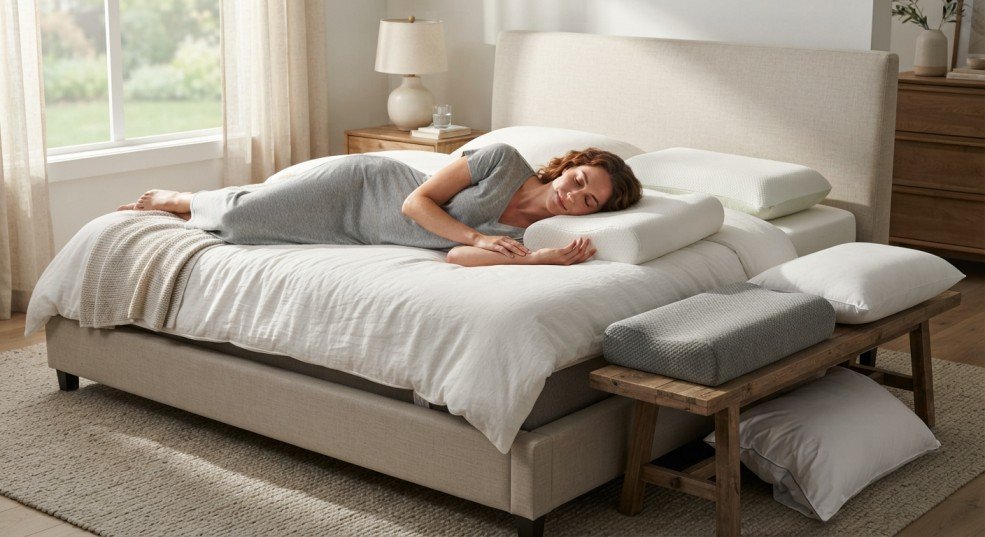
The right pillow can make a noticeable difference in how your neck, shoulders, and back feel after a night’s sleep. But choosing one isn’t simply about finding the softest or most expensive option. Your sleep position, shoulder width, mattress, pillow loft, and preferred firmness all matter. The goal is to find a pillow that supports your head and neck while helping maintain comfortable spinal alignment throughout the night.
Why the Right Pillow Matters for Neck and Back Support
Your pillow has an important job: it fills the space between your head and the mattress while supporting your neck. When that support is appropriate, your head can remain in a more neutral position instead of being pushed too far forward, backward, or to one side.
This is particularly relevant to the cervical spine, the section of your spine running through your neck. A pillow that is too high may force your neck upward, while one that is too low can allow your head to drop toward the mattress. Either situation can make it harder to maintain neutral alignment.
The same principle applies to back support. Although a pillow primarily supports your head and neck, your sleeping position affects the alignment of your entire body. Good support should reduce unnecessary pressure and help you settle into a comfortable position.
If you regularly wake up with neck pain, shoulder discomfort, or back pain, your pillow may be worth reassessing. However, pain can have many causes, so a pillow should not be considered a treatment for an underlying medical condition.
Start With Your Sleep Position
One of the easiest ways to narrow down your options is to consider how you normally sleep. Side sleepers, back sleepers, and stomach sleepers place different demands on a pillow.
Best Pillows for Side Sleepers
Side sleepers generally need enough pillow height to fill the space between the head and mattress. Shoulder width is an important factor here. Someone with broader shoulders may need a higher pillow loft than someone with narrower shoulders.
The pillow should keep your head reasonably level rather than allowing it to tilt toward the mattress or away from it. A supportive pillow with sufficient loft and appropriate firmness can help maintain neutral alignment.
Memory foam, latex, and adjustable pillows can all be worth considering for side sleeping, depending on the feel and level of support you prefer.
Best Pillows for Back Sleepers
Back sleepers typically don’t need as much pillow height as side sleepers. A pillow with moderate loft can support the natural curve of the neck without pushing the head too far forward.
A contoured pillow or cervical pillow may appeal to back sleepers who prefer more structured neck support. The key is not simply choosing the firmest option. The pillow should provide support without creating uncomfortable pressure.
Best Pillows for Stomach Sleepers
Stomach sleeping can place the neck in a more rotated position, particularly when the head is turned to one side. A pillow with lower loft may help prevent the head from being lifted too far from the mattress.
Some stomach sleepers prefer a softer, thinner pillow because it reduces the amount of elevation under the head. Personal comfort still matters, but excessive pillow height is generally something to avoid in this position.
What About Combination Sleepers?
If you change positions throughout the night, an adjustable pillow can be especially useful. You can modify the amount of filling to change the pillow loft and find a balance that works across different positions.
Understand Pillow Height and Pillow Loft
Pillow height and pillow loft are closely related, although the terms can be used slightly differently by manufacturers. Loft generally refers to the pillow’s height when it is resting naturally, while actual height under your head can change when the filling compresses.
A high-loft pillow isn’t automatically better. The right loft depends on your sleep position, shoulder width, mattress, body shape, and the way the pillow compresses.
For example, a side sleeper may need more loft to bridge the gap created by the shoulder, while a stomach sleeper may be more comfortable with a low-loft design.
The easiest way to think about it is this: your pillow should support your head without noticeably bending your neck out of its natural position.
Choose the Right Pillow Firmness
Pillow firmness is another important consideration, but it shouldn’t be evaluated separately from loft.
A soft pillow can feel comfortable initially because it offers cushioning and pressure relief. However, if it compresses too much during the night, it may not provide the support you need.
Medium-firm pillows can offer a balance between cushioning and structure. Firm pillows generally resist compression more strongly, which may be useful for some side sleepers who need consistent support.
Still, firmness is personal. A firm pillow with the wrong loft can be just as uncomfortable as a soft pillow that doesn’t provide enough support. Look at firmness and pillow height together rather than choosing one based on the label alone.
Compare Different Pillow Materials
The filling inside a pillow affects its feel, support, breathability, and durability. Understanding the differences can make shopping much easier.
Memory Foam
Memory foam is known for its ability to contour around the head and neck. It can provide consistent support and pressure relief, particularly for people who like a more structured feel.
Some pillows use a solid piece of memory foam, while others contain shredded foam that can be adjusted or moved around.
Latex
Latex pillows tend to be responsive and resilient. Rather than allowing your head to sink deeply into the material, latex generally provides a supportive, springy feel.
Some people also prefer latex because of its airflow and breathable characteristics.
Down Pillows
Down pillows offer a soft, moldable feel and can be fluffed or reshaped. They are often appealing to people who prefer a less structured pillow.
Because down can compress more easily, however, sleepers looking for firm, consistent neck support may prefer a different construction.
Down Alternative
Down alternative pillows can provide a similarly soft experience while using synthetic filling. They come in different firmness and loft options, making them suitable for a variety of preferences.
Buckwheat Pillows
Buckwheat pillows contain small hulls that shift around the head and neck. Their fill can provide a firmer, more supportive sensation while allowing some customization of the pillow’s shape.
They are quite different from traditional soft pillows, so they’re generally best suited to people who enjoy a structured feel.
Consider a Specialized Pillow Design
If standard pillows don’t give you the support you want, specialized designs offer another route.
Cervical pillows are shaped specifically to support the neck and encourage a more neutral position. They can have raised areas that cradle the head while supporting the cervical spine.
Contoured pillows use varying heights across the pillow rather than maintaining one uniform surface. Depending on the design, they can accommodate back and side sleeping.
Ergonomic pillows take a similar support-focused approach, using shapes intended to encourage better positioning during sleep.
Adjustable pillows are particularly versatile. Many allow you to add or remove filling, making it easier to change the loft and firmness. This can be helpful if you’re unsure what height works best or if you frequently change sleeping positions.
How to Choose a Pillow When You Have Neck or Back Pain
If you experience neck pain, start by examining whether your pillow allows your head and neck to remain in a comfortable, neutral position. A pillow that is too high, too low, or too soft may not provide the support you expect.
For back pain, consider your entire sleeping posture rather than focusing exclusively on the pillow under your head. Side sleepers sometimes find that placing a pillow between the knees helps them maintain a more comfortable body position. Back sleepers may prefer placing a pillow under the knees.
These positioning strategies are not substitutes for medical care. If neck pain or back pain is persistent, severe, worsening, or accompanied by other concerning symptoms, speak with a qualified healthcare professional.
Match Your Pillow to Your Mattress
Your mattress can change how your pillow feels. On a softer mattress, your shoulder and upper body may sink farther into the surface. A firmer mattress may keep you higher, changing the distance between your head and the mattress.
This is particularly important for side sleepers. Your shoulder sinks into the mattress while your head remains above it, creating a gap that the pillow needs to fill.
Instead of evaluating a pillow in isolation, think about your entire sleep setup: mattress firmness, sleep position, shoulder width, pillow loft, and firmness all work together.
Signs Your Pillow May Not Be Providing Enough Support
Your body can sometimes give you clues that your pillow isn’t working well for you. You might wake up with stiffness, frequently rearrange your pillow during the night, or feel that your head isn’t properly supported.
Other signs include noticeable pressure around the shoulder or neck, a pillow that collapses quickly, or a feeling that your head is being pushed too far forward or sideways.
These signs don’t necessarily mean the pillow is the cause of discomfort. However, they can be a reason to reconsider its height, firmness, material, or overall design.
How to Test Whether a Pillow Provides Proper Support
When testing a pillow, don’t focus only on whether it feels soft and comfortable for a few minutes. Pay attention to the position of your head and neck.
If you’re a side sleeper, check whether your head appears to stay relatively level with your spine. Your shoulder width and mattress firmness should also be considered.
For back sleepers, look for a comfortable position that doesn’t push your chin toward your chest. Stomach sleepers generally benefit from avoiding excessive elevation.
Most importantly, notice pressure points. A good pillow should provide support without creating uncomfortable pressure around the neck or shoulders.
Common Pillow-Buying Mistakes to Avoid
Choosing a pillow simply because it feels exceptionally soft is one common mistake. Softness can be pleasant, but it doesn’t necessarily mean adequate support.
Another mistake is selecting a pillow based only on its material. Memory foam, latex, down, down alternative, and buckwheat all behave differently. Your sleep position and desired level of support are just as important.
It’s also easy to ignore pillow loft. Even an excellent pillow can feel wrong when its height doesn’t suit your body or sleeping position.
Finally, don’t assume that the most expensive pillow will automatically provide the best results. The best choice is the one that fits your individual support and comfort needs.
Quick Guide to Choosing the Right Pillow
| Sleep Style or Need | What to Look For |
| Side sleepers | Higher loft, appropriate firmness, support suited to shoulder width |
| Back sleepers | Moderate loft and comfortable neck support |
| Stomach sleepers | Lower loft and a less elevated feel |
| Combination sleepers | Adjustable pillows |
| Neck support | Cervical or contoured designs |
| Pressure relief | Memory foam, latex, or suitable softer fills |
| Customizable support | Adjustable filling |
| Structured support | Ergonomic or contoured pillows |
How to Maintain Your Pillow for Long-Term Support
Even a high-quality pillow needs proper maintenance. Use a pillowcase and, when appropriate, a pillow protector to help protect the pillow from body oils, moisture, dust, and everyday buildup.
Follow the manufacturer’s cleaning instructions rather than assuming every pillow can go into the washing machine. Some materials require specialized care.
It’s also worth checking your pillow periodically. If it becomes permanently flat, lumpy, misshapen, or noticeably less supportive, it may no longer be providing the same level of comfort.
Good pillow maintenance can help preserve hygiene, softness, durability, and longevity.
Frequently Asked Questions
What type of pillow is best for neck support?
There is no single pillow that works best for everyone. Cervical pillows, contoured pillows, memory foam, latex, and adjustable pillows can all provide different forms of neck support. The best choice depends on your sleep position, preferred firmness, and required pillow loft.
What pillow is best for side sleepers?
Side sleepers often benefit from a pillow with enough loft to fill the space between the head and mattress. Shoulder width is also important. A supportive, appropriately firm pillow can help maintain a more neutral alignment.
What pillow is best for back sleepers?
Back sleepers often prefer moderate loft that supports the neck without pushing the head too far forward. A contoured or cervical pillow may be worth considering if you prefer structured support.
What pillow is best for stomach sleepers?
A lower-loft pillow is generally a better starting point for stomach sleepers. A thinner, softer design can reduce excessive elevation under the head.
Is memory foam good for neck support?
Memory foam can provide consistent, contouring support around the head and neck. Whether it is right for you depends on its loft, firmness, shape, and your sleeping position.
Is a firm pillow better for neck pain?
Not necessarily. Firmness alone doesn’t determine whether a pillow provides proper support. Pillow height, loft, sleep position, and spinal alignment are also important.
How high should my pillow be?
Your ideal pillow height depends on your sleeping position, shoulder width, mattress firmness, body shape, and the way the pillow compresses. The goal is to keep your head and neck comfortably aligned rather than noticeably tilted.
Are cervical pillows worth trying?
Cervical pillows can be useful for people who prefer a structured design intended to support the neck. However, comfort and suitability vary from person to person.
How often should you replace a pillow?
There isn’t a universal replacement schedule for every pillow. Instead, look for signs of deterioration, such as persistent flattening, lumps, loss of loft, stains, or a noticeable reduction in support and comfort.
Final Takeaway: Choose Support Based on Your Sleep Style
The best pillow isn’t necessarily the firmest, softest, or most expensive one. Start with your sleep position, then consider shoulder width, pillow loft, firmness, material, mattress, and desired pressure relief. Whether you choose memory foam, latex, down, a cervical design, or an adjustable pillow, the goal is the same: comfortable support that helps keep your head, neck, and spine in a natural position.