

Why Your Bedding May Be Hurting Your Skin
You follow your skincare routine every night, wash your face, apply your moisturizer and still wake up with itchy, irritated skin. Before you blame your products, consider what you’re actually sleeping on. Most people spend 7 to 8 hours in direct contact with their bedding, yet it’s one of the last things they think to examine when skin irritation flares up. The wrong fabrics, hidden chemical dyes, and invisible allergens like dust mites can all quietly disrupt your skin while you sleep. This guide walks you through exactly what dermatologists recommend, so your bed finally becomes a place your skin can heal, not suffer.
What Makes Bedding Truly Safe for Sensitive Skin?
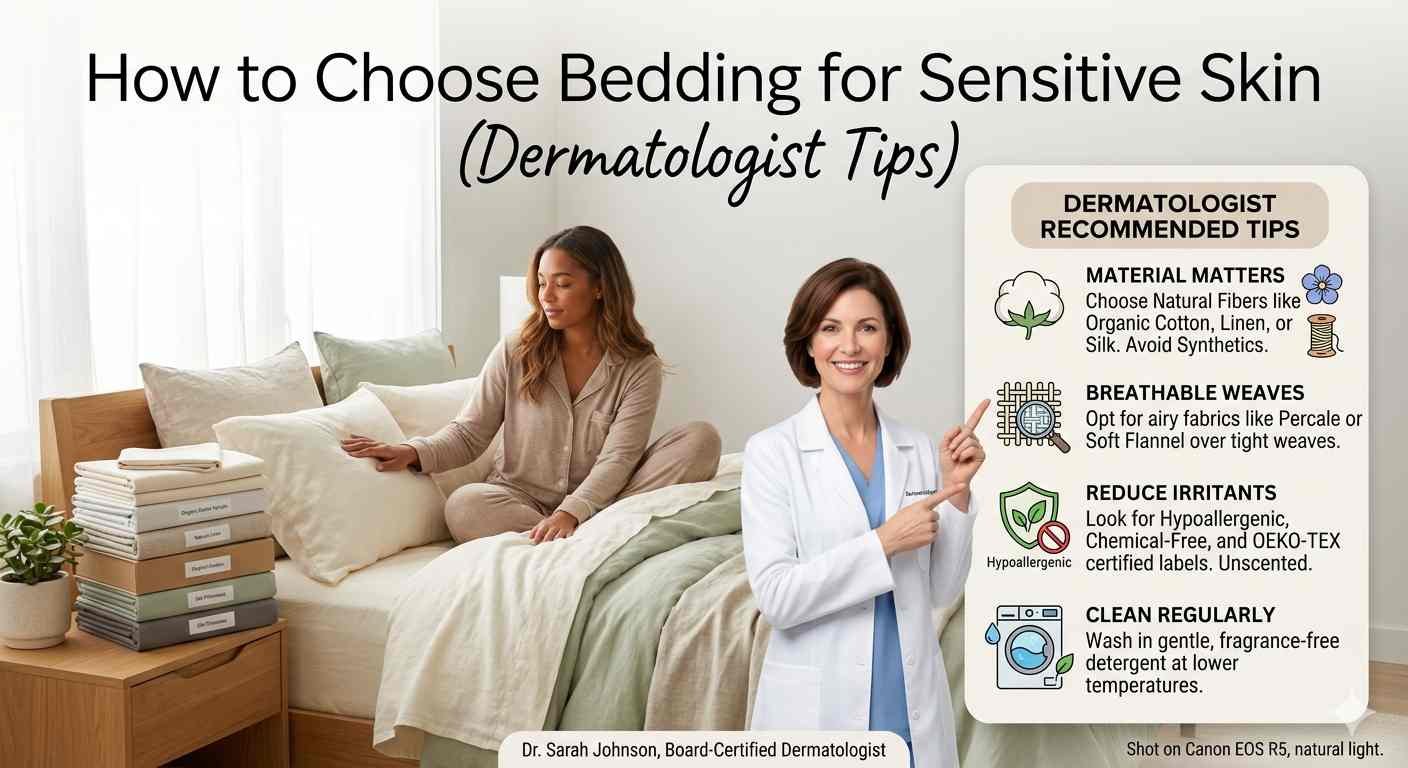
Not everything marketed as “soft” or “premium” is actually gentle enough for reactive skin. The difference between bedding that soothes and bedding that triggers comes down to four key factors, and understanding them will save you from a lot of frustrating guesswork.
Natural & Chemical-Free Fabric
The first thing to look at is how a fabric was processed. Many conventional sheets go through a gauntlet of finishing treatments, synthetic chemical dyes, wrinkle-resistant coatings, and optical brighteners that cling to the fibers long after manufacturing. For someone with sensitive skin, contact dermatitis, or chemical sensitivity, that invisible residue is often the cause of reactions that seem to come out of nowhere.
This is exactly why the OEKO-TEX Standard 100 certification matters so much. It’s a third-party standard that independently verifies a fabric has been tested and confirmed free from over 100 harmful substances from heavy metals to allergenic dyes to formaldehyde residues. When you see that label, you know the chemical-free processing claim is backed by actual testing, not just marketing language.
Breathability and Moisture Control
A fabric that traps heat creates a warm, damp microclimate against your skin overnight — precisely the kind of environment that dust mites love and that makes eczema, psoriasis, and general skin irritation significantly worse. Breathability and moisture-wicking properties aren’t just comfort features; for people with sensitive skin, they’re genuinely therapeutic. Fabrics that pull moisture away from the body keep your skin surface drier and calmer throughout the night.
Thread Count and Texture
Here’s one of the most common misconceptions in bedding: a higher thread count is not automatically better for sensitive skin. Sheets above 600 thread count typically require synthetic processing to pack that many threads together, and those synthetic additions are exactly what you want to avoid. A thread count between 300 and 600 is the sweet spot , soft enough to feel genuinely luxurious, breathable enough to regulate temperature, and gentle enough to prevent friction-based irritation on reactive skin.
Temperature Regulation
Overheating at night is one of the most underrated triggers for itching and skin flare-ups. Natural fibers actively help regulate body temperature in a way that polyester and synthetic blends simply cannot. If you’ve ever noticed your skin feels worse on nights when you sleep hot, the fabric you’re sleeping on is very likely part of the problem.
The Best Fabrics for Sensitive Skin
Organic Cotton – The Everyday Reliable Choice
Organic cotton has earned its reputation as the go-to fabric for sensitive skin, and it deserves it. When properly certified, either OEKO-TEX or GOTS, it’s completely free from the pesticide residues that conventional cotton carries through its growing and manufacturing process. It’s naturally breathable, durable, and soft in a way that holds up beautifully over years of regular washing.
For those dealing with contact dermatitis or general skin sensitivity, organic cotton in a sateen weave offers a particularly smooth surface that minimizes friction without requiring any synthetic treatment. At Dainty Linen, our Cotton Sateen Bedding Sets are made with exactly this kind of quality in mind, a clean, smooth finish that feels gentle from the first wash.
Bamboo Lyocell – The Moisture-Wicking Powerhouse
If you run warm at night or find that sweating aggravates your eczema, bamboo lyocell is genuinely worth your attention. Its fiber structure is naturally round and smooth, which means it glides across skin rather than dragging against it. More importantly, it’s inherently antimicrobial, it actively resists the bacteria and mold growth that worsen sensitive skin conditions over time.
It’s worth distinguishing bamboo lyocell from bamboo viscose, which is produced through much heavier chemical processing. Lyocell is made using a cleaner, closed-loop method that preserves the fiber’s natural hypoallergenic qualities. The result is a fabric that is exceptionally breathable, soft from night one, and highly effective at managing moisture while you sleep.
TENCEL™ / Lyocell – Clean, Soft & Skin-Soothing
TENCEL™ is a branded form of lyocell derived from sustainably harvested wood pulp. What sets it apart is its production process, a closed-loop system that recycles water and solvents, leaving virtually zero chemical residue in the finished fabric. For people with psoriasis or contact dermatitis who are particularly sensitive to chemical triggers, that level of clean processing is significant.
It’s also extraordinarily soft right out of the packaging and maintains that softness wash after wash without degrading. The combination of smooth texture, excellent moisture management, and genuinely chemical-free processing makes TENCEL™ one of the most dermatologist-recommended fabric choices available today.
100% Mulberry Silk – The Luxury Option With Real Skin Benefits
Silk tends to get filed under “indulgence,” but for people with severely sensitive or eczema-prone skin, it’s much more than that. The protein-based fibers in 100% mulberry silk closely mimic the structure of human skin, which means they create almost no friction as you move during sleep. Overnight friction is a real but often overlooked cause of morning skin irritation, and silk effectively eliminates it.
Beyond that, mulberry silk is naturally hypoallergenic, resistant to dust mites, and resistant to the mold and mildew that contribute to allergen exposure in the bedroom. The investment is higher than cotton or bamboo, but for those with severely reactive skin, the difference it makes is often dramatic.
Linen Fabric – The Breathable All-Season Performer
Linen has a reputation for feeling rough, and it’s partially deserved out of the box, it can feel stiff and coarse. But that initial texture changes completely with washing. Linen softens progressively with every single wash cycle, and what you’re left with after a few months is one of the most breathable, temperature-regulating fabrics you can sleep on.
Its natural antimicrobial properties make it resistant to the mold and mildew growth that contributes to allergen exposure in bedrooms, particularly in humid climates. For hot sleepers, or anyone who lives in a warmer environment, linen is genuinely hard to beat as a year-round bedding material.
Matching Bedding to Your Skin Condition
Eczema
Dust mites are among the most common and most overlooked eczema triggers. They live deep in mattresses and pillows, and no amount of sheet washing will eliminate them without a proper barrier in place. Pairing a breathable, hypoallergenic fabric like organic cotton or bamboo lyocell with a quality mattress protector and zippered pillow encasements creates both a comfortable sleep surface and a physical barrier against allergens. Washing sheets weekly in hot water around 130°F or 60°C is also essential to keep dust mite populations under control.
Psoriasis
For psoriasis, friction is the primary concern. Any fabric that catches or drags against the skin during sleep can aggravate plaques and cause real overnight discomfort. TENCEL™ and mulberry silk are the strongest choices here both are ultra-smooth and provide the temperature regulation needed to prevent the overheating that makes psoriasis flare-ups worse.
Contact Dermatitis
Contact dermatitis from bedding is almost always caused by one of three things: chemical dyes, synthetic fabric finishes, or laundry detergent residue left in the fabric after washing. Switching to a fragrance-free detergent alone often makes a noticeable difference within just a few weeks. When buying new bedding, OEKO-TEX Standard 100 certification is your most reliable safety net and always wash new sheets before first use to remove any remaining manufacturing residue.
Allergen Sensitivity – Dust Mites, Pet Dander & Mold
These three allergens are invisible, but their impact on sensitive skin and sleep quality is very real. A waterproof or quilted mattress protector is one of the highest-value investments you can make for an allergen-reduced sleep environment. At Dainty Linen, our quilted and waterproof mattress pads, along with our pillow protectors, provide exactly this kind of reliable barrier, protecting both your skin and the lifespan of your bedding. Keeping bedroom humidity below 50% and airing out the room daily further reduces the conditions that allow mold, mildew, and dust mites to thrive.
Fabrics to Avoid
- Polyester and synthetic blends – they trap heat and moisture, creating ideal conditions for dust mites, bacteria, and skin irritation
- Heavily dyed fabrics without certification – chemical dyes are among the most common contact dermatitis triggers
- Wrinkle-free or non-iron treated fabrics – these often contain formaldehyde-based resins that remain in the fibers
- Uncertified microfiber – fine synthetic particles can aggravate reactive skin over time
- Rough wool – even natural fibers can cause physical irritation if the texture is too coarse
How to Care for Sensitive Skin Bedding
Getting the right fabric is genuinely half the battle, but how you maintain it matters just as much. Always wash new bedding before sleeping on it, since manufacturing residues need to come out before they come into contact with your skin. Use a fragrance-free, dye-free detergent every single time, scented detergents leave chemical residue that builds up in fibers with repeated use, even in small amounts. Skip fabric softeners entirely; they coat fibers with a chemical film that can aggravate sensitive skin. Wool dryer balls are a clean, effective alternative that soften fabric naturally without any additives.
Washing sheets every 5 to 7 days and pillowcases every 3 to 4 days is the recommended frequency for anyone with sensitive skin or allergen concerns. Hot water washing at 130°F effectively kills dust mites and clears bacteria from fabric, so it’s worth making a habit.
Dermatologist-Approved Checklist Before You Buy
Before purchasing any new bedding, it’s worth pausing to confirm a few things. Is the fabric made from 100% natural fibers, organic cotton, bamboo lyocell, silk, linen, or TENCEL™? Does it carry OEKO-TEX Standard 100 or GOTS organic certification? Does the thread count fall between 300 and 600? Are there any synthetic dyes, added fragrances, or wrinkle-free chemical treatments listed in the product details? And finally, do you have a mattress protector and pillow encasements already in place? If you can answer those questions confidently, you’re in good shape.
Sleep Better, Feel Better
The right bedding does more than just feel comfortable, it actively supports your skin’s natural overnight repair process and reduces the daily triggers that keep sensitive skin in a constant cycle of reaction. At Dainty Linen, our collection is built around exactly this kind of thoughtful comfort, from our Cotton Sateen Sets and Down Alternative Comforters to our mattress pads and pillow protectors. Your skin works hard enough during the day, give it the rest it actually deserves.