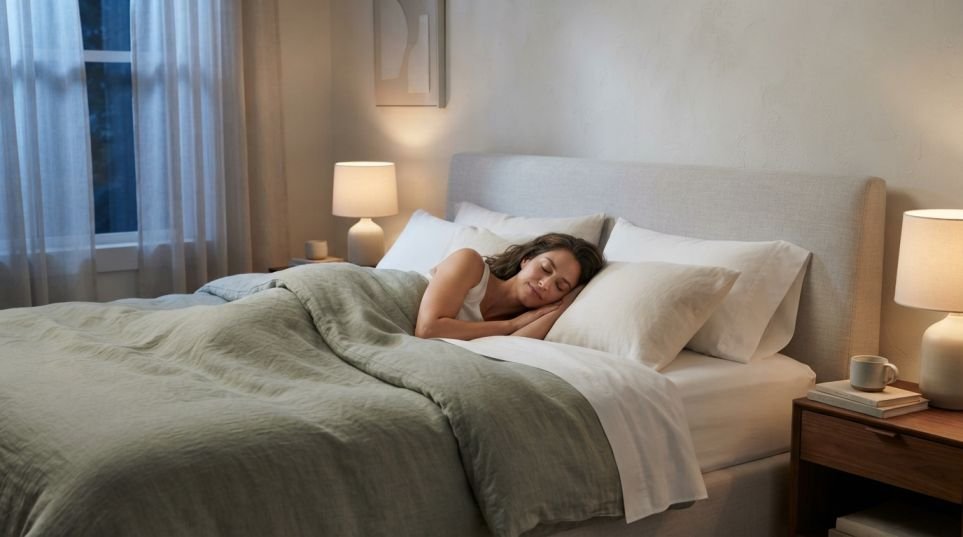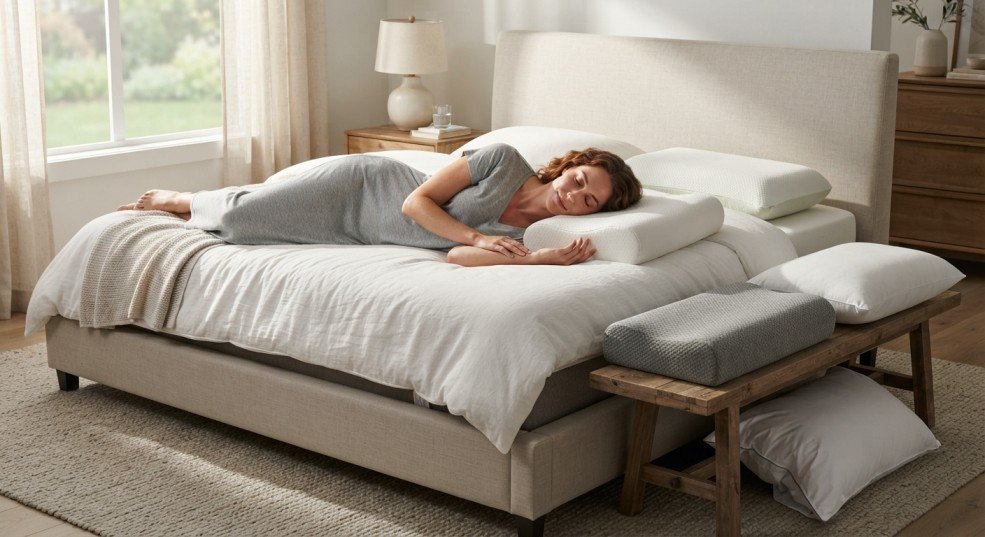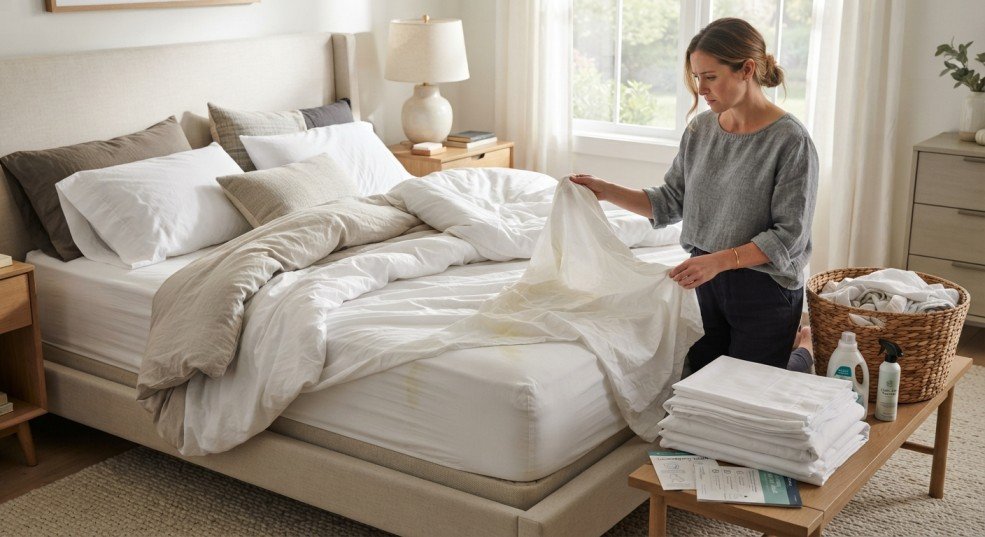


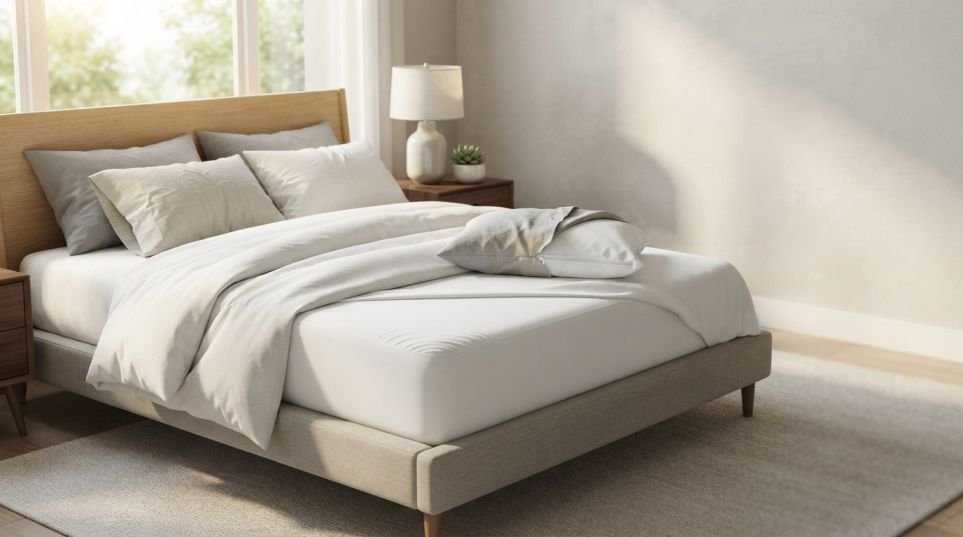
A good night’s sleep starts with a clean, comfortable place to rest. While sheets and pillowcases get regular attention, the mattress and pillows underneath are often overlooked. Over time, they can collect sweat, moisture, body oils, dead skin cells, dust mites, allergens, and accidental spills. Mattress and pillow protectors provide an extra layer of defense, helping keep your bedding cleaner, more comfortable, and better protected for longer.
What Are Mattress and Pillow Protectors?
A mattress protector is a removable layer designed to sit between your mattress and fitted sheet. Depending on the material and construction, it can help protect the mattress from moisture, spills, stains, allergens, and everyday wear and tear.
A pillow protector works in much the same way. It fits over the pillow underneath the regular pillowcase, creating a barrier between the pillow and the sleeper. Since pillows come into close contact with the face, hair, and skin every night, protecting them can be particularly useful for maintaining a cleaner sleeping environment.
Both products are available in different materials and designs. Some focus primarily on moisture protection, while others prioritize breathability, softness, allergen protection, or easy maintenance.
1. Help Protect Against Dust Mites and Allergens
Your bed can provide a comfortable environment for more than just sleeping. Mattresses and pillows can accumulate dust mites, allergens, and other particles over time, especially when they aren’t protected.
A suitable protector creates an additional layer between you and the underlying bedding. For people concerned about household allergens, choosing a hypoallergenic protector can be a useful part of an overall allergy-conscious bedding routine.
Of course, a protector isn’t a substitute for regular cleaning, but it can make it easier to manage the things that naturally accumulate in bedding.
2. Promote Better Sleep Hygiene
Sleep hygiene involves the habits and conditions that support healthy, comfortable sleep. Keeping your sleeping area clean is an important part of that routine.
Because mattresses and pillows aren’t as easy to wash as sheets or pillowcases, protectors offer a practical way to add another washable layer to your bedding. Instead of allowing sweat, oils, and everyday debris to build up directly on the mattress or pillow, the protector takes much of that exposure.
The result is a clean sleep environment that’s easier to maintain as part of your regular bedding routine.
3. Protect Against Sweat and Moisture
Most people release some moisture while sleeping. Night sweats, humidity, and everyday perspiration can gradually expose a mattress or pillow to moisture.
A protector with an appropriate waterproof barrier can help prevent liquids from reaching the underlying bedding. This can be especially useful for households with children, pets, or anyone who frequently experiences night sweats.
Moisture management also matters because prolonged dampness can contribute to unpleasant odors and may create conditions where mold and mildew become a concern. A properly selected protector can therefore be an important part of protecting the bedding beneath it.
4. Reduce the Risk of Spills and Stains
An unexpected coffee spill, water bottle leak, or nighttime accident can quickly turn into a difficult mattress-cleaning problem.
A mattress is not something you can simply put into a washing machine. A protective layer gives you a much easier solution. Depending on the product, a protector can help shield the mattress from spills and stains before they penetrate deeper into the material.
This is particularly valuable for children’s rooms, guest bedrooms, pet-friendly homes, and any bedroom where accidental spills are a possibility.
5. Help Extend Mattress and Pillow Lifespan
A quality mattress and pillow can be a significant investment. Naturally, you want them to remain comfortable and usable for as long as possible.
Regular exposure to moisture, body oils, dead skin cells, stains, and general wear and tear can affect bedding over time. A protector adds a layer between these everyday sources of exposure and the mattress or pillow itself.
While no protector can guarantee a particular mattress lifespan or pillow lifespan, reducing direct exposure to contaminants and moisture can help support better long-term care.
It’s also worth checking the manufacturer’s care recommendations and mattress warranty requirements. Some warranties have specific conditions regarding stains, damage, or proper maintenance.
6. Keep Body Oils and Dead Skin Cells Away From Bedding
Every night, your skin naturally produces oils and sheds dead skin cells. Hair products, lotions, and other personal-care products can also transfer to bedding.
Over time, this buildup can affect the cleanliness and freshness of an unprotected mattress or pillow. A removable protector makes this exposure much easier to manage.
Rather than trying to clean the underlying mattress or pillow frequently, you can remove the protector and clean it according to the manufacturer’s instructions.
7. Help Manage Pet Dander
Pets are part of the family, but they can also introduce pet dander, hair, dirt, and other particles into the bedroom.
If your pet regularly spends time on the bed, a mattress or pillow protector can provide an extra layer of protection. It won’t eliminate pet dander from the room, but it can make routine bedding maintenance more manageable.
For households concerned about allergies, combining protective bedding with regular vacuuming and washing can help maintain a cleaner sleeping space.
8. Make Cleaning and Maintenance Easier
One of the biggest practical advantages of protectors is convenience.
Many modern protectors are machine washable, allowing you to remove them, wash them, dry them, and put them back on without having to deal with the difficulty of cleaning a mattress or pillow itself.
Regular washing can help remove accumulated sweat, oils, allergens, and other debris. Always follow the care label because washing and drying requirements vary by material.
For busy households, easy cleaning and maintenance can make a significant difference. A product that is simple to remove and clean is much more likely to become a consistent part of your bedding routine.
9. Support a More Comfortable Sleep Environment
Protection doesn’t have to come at the expense of comfort. The material used in a protector can make a noticeable difference in how it feels during the night.
For people who tend to sleep warm, breathable fabric can be an important consideration. Materials that allow better airflow can help reduce the feeling of trapped heat.
Temperature regulation is another factor worth considering. A protector that combines protection with breathability can help maintain a more comfortable sleeping environment without making the bed feel unnecessarily heavy or restrictive.
When shopping for a protector, consider both the level of protection you need and how the material feels against your body.
10. Help Prevent Unpleasant Odors
Sweat, moisture, body oils, and other substances can contribute to unwanted odors in bedding. Once these substances reach the inside of a mattress or pillow, removing the smell can be difficult.
A washable protector provides a convenient first line of defense. By regularly washing the protective layer, you can help manage the sources of odor before they become deeply embedded in the underlying bedding.
This makes odor prevention another practical reason to include mattress and pillow protectors in your regular bedding routine.
Waterproof vs. Breathable Mattress Protectors: Which Should You Choose?
Choosing between different types of protectors depends largely on your needs.
A waterproof protector is useful when your main concern is moisture, spills, or stains. It typically includes a waterproof barrier designed to prevent liquids from passing through to the mattress.
A breathable protector, meanwhile, may be more appealing if comfort and airflow are your priorities. Breathable fabric can help create a less stuffy sleeping surface, which may be particularly beneficial for hot sleepers.
Some products are designed to provide both moisture protection and breathability. When comparing options, look at the construction, materials, care instructions, and intended use rather than assuming every protector performs in exactly the same way.
How to Choose the Right Mattress and Pillow Protectors
Start with the type of protection you actually need. If spills and moisture are your primary concerns, look for a suitable waterproof option. If allergies are a bigger consideration, focus on features associated with allergy protection and hypoallergenic construction.
Fit is equally important. A protector should match the dimensions of your mattress or pillow and stay securely in place. An oversized or poorly fitting protector can be uncomfortable and may not provide the coverage you expect.
Pay attention to care instructions, too. A machine washable protector can make regular maintenance considerably easier. If you sleep hot, consider breathable materials and features designed to support temperature regulation.
Ultimately, the best protector is one that balances protection, comfort, fit, durability, and ease of care.
How to Care for Mattress and Pillow Protectors
Regular maintenance helps your protectors do their job effectively. Follow the manufacturer’s washing instructions and clean them at an appropriate frequency based on how they’re used.
Deal with spills promptly, wash removable protectors according to their care labels, and make sure they are completely dry before putting them back on the bed. It’s also a good idea to inspect them occasionally for signs of wear and tear.
If a protector becomes damaged, loses its fit, or no longer provides the level of protection it was designed to offer, replacing it may be the better option.
Do Mattress and Pillow Protectors Really Make a Difference?
Yes, when chosen and maintained properly, mattress and pillow protectors can make everyday bedding care much easier. They provide an extra layer between sleepers and their mattresses or pillows, helping manage moisture, spills, stains, allergens, body oils, dead skin cells, and pet dander.
They can also make regular cleaning simpler while helping protect a valuable bedding investment. Most importantly, they support a cleaner, more comfortable sleep environment without requiring complicated maintenance.
Frequently Asked Questions
Do mattress protectors help with dust mites?
A suitable protector can provide an additional barrier against dust mites and the allergens associated with them. Regular washing and general bedroom cleaning are still important for overall allergen management.
Are mattress protectors waterproof?
Not all mattress protectors are waterproof. Some are designed specifically with a waterproof barrier, while others focus on breathability, comfort, or basic protection. Always check the product specifications.
Do pillow protectors help with allergies?
They can be useful as part of an allergy-conscious bedding routine. A pillow protector can create an additional barrier between the sleeper and the pillow, particularly when paired with regular washing and suitable hypoallergenic bedding.
Can mattress protectors prevent mold and mildew?
A moisture-resistant or waterproof protector can help reduce the amount of liquid reaching the mattress. However, it cannot guarantee protection from mold and mildew. Keeping bedding dry and maintaining good ventilation are also important.
Are mattress and pillow protectors machine washable?
Many are machine washable, but care instructions vary. Always follow the manufacturer’s washing and drying recommendations to avoid damaging the protective materials.
Do mattress protectors make you sleep hotter?
It depends on the material and construction. Some protectors may feel warmer, while options made with breathable fabrics can help improve airflow and comfort. Hot sleepers should pay particular attention to breathability and temperature regulation.
Can mattress protectors extend mattress lifespan?
They can help protect the mattress from moisture, stains, body oils, and everyday wear and tear. While they cannot guarantee a longer lifespan, reducing these sources of exposure can support better mattress care.
Final Thoughts
Mattress and pillow protectors are a simple addition to any bedding routine. They can help manage allergens, moisture, spills, stains, odors, and everyday wear while making cleaning easier. By choosing the right combination of protection, breathability, fit, and care, you can create a cleaner sleep environment and give your mattress and pillows better protection over time.